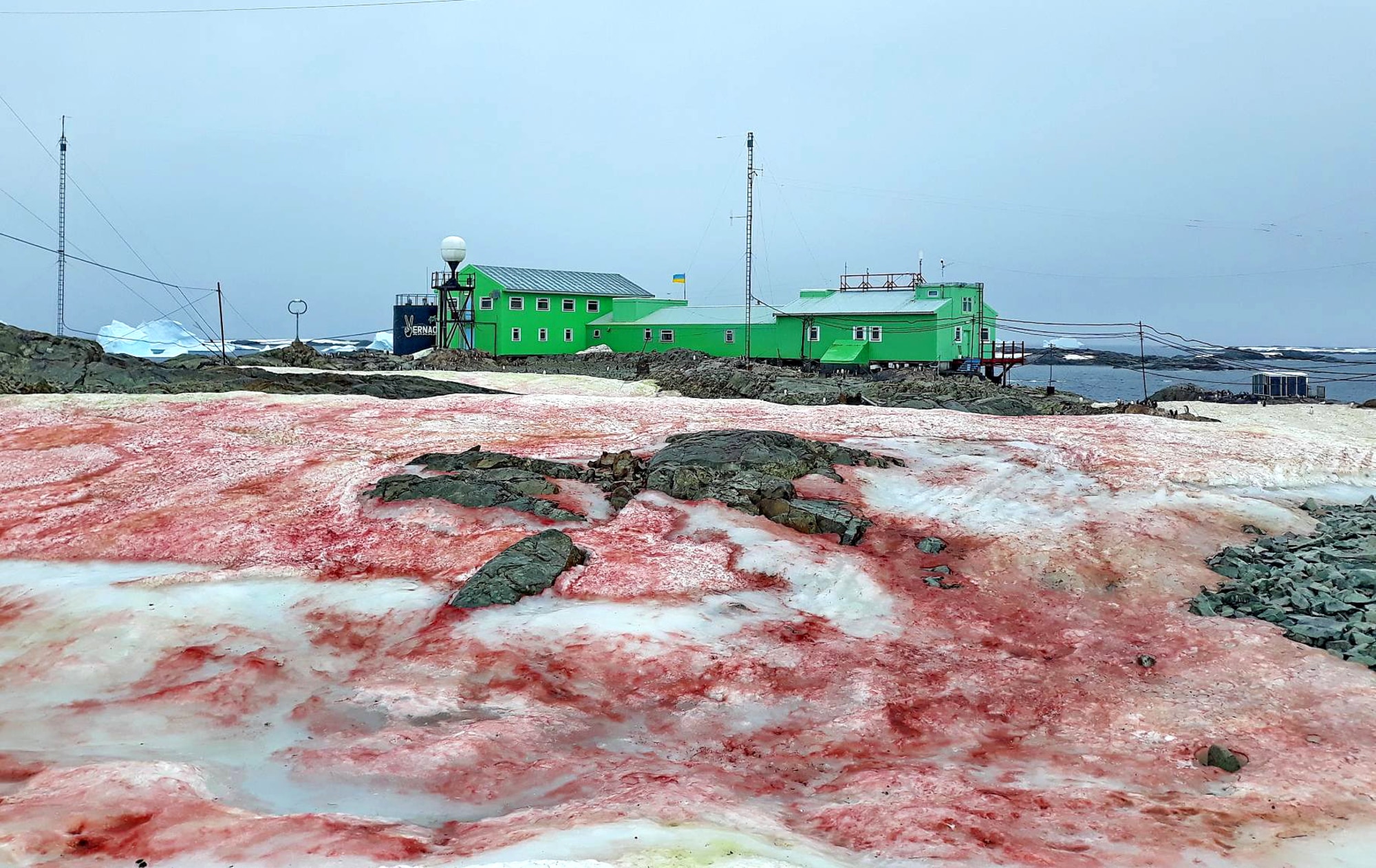
It’s almost spooky!
As if the entire island is covered with thick red blood!
Ukraine’s Vernadsky Research Base (located on Galindez Island, off the coast of Antarctica’s northernmost peninsula) has been coated with red and pink streaks, researchers are calling “raspberry snow.” A Facebook post by the Ministry of Education and Science of Ukraine explains why streaks of red and pink are slashing across the edges of glaciers and puddling on the frosty plains.
In reality, it is actually a type of red-pigmented algae called Chlamydomonas Chlamydomonas nivalis, which hides in snowfields and mountains. The algae thrive in freezing water and spend winters lying dormant in snow and ice. But when summer comes and the snow melts, the algae bloom, spreading red, flower-like spores.
The red colour comes from carotenoids (the same pigments that make pumpkins and carrots orange) in the algae’s chloroplasts. In addition to their crimson hue, these pigments also absorb heat and protect the algae from the ultraviolet light that comes from the sun. This allows the organisms to bask in the summer sun’s nutrients without the risk of genetic mutations.
Although that’s good for the algae but not great for the ice. According to Ukrainian researchers, because of the red-crimson colour, the snow reflects less sunlight and melts faster. As a consequence, it produces more and more bright algae.
The more heat the algae absorbs, the faster the surrounding ice melts. The more ice that melts, the faster the algae can spread. That, in turn, leads to more warming, more melting, and more algal blooming
Read more here: Spooky ‘blood snow’ invades Antarctic island
